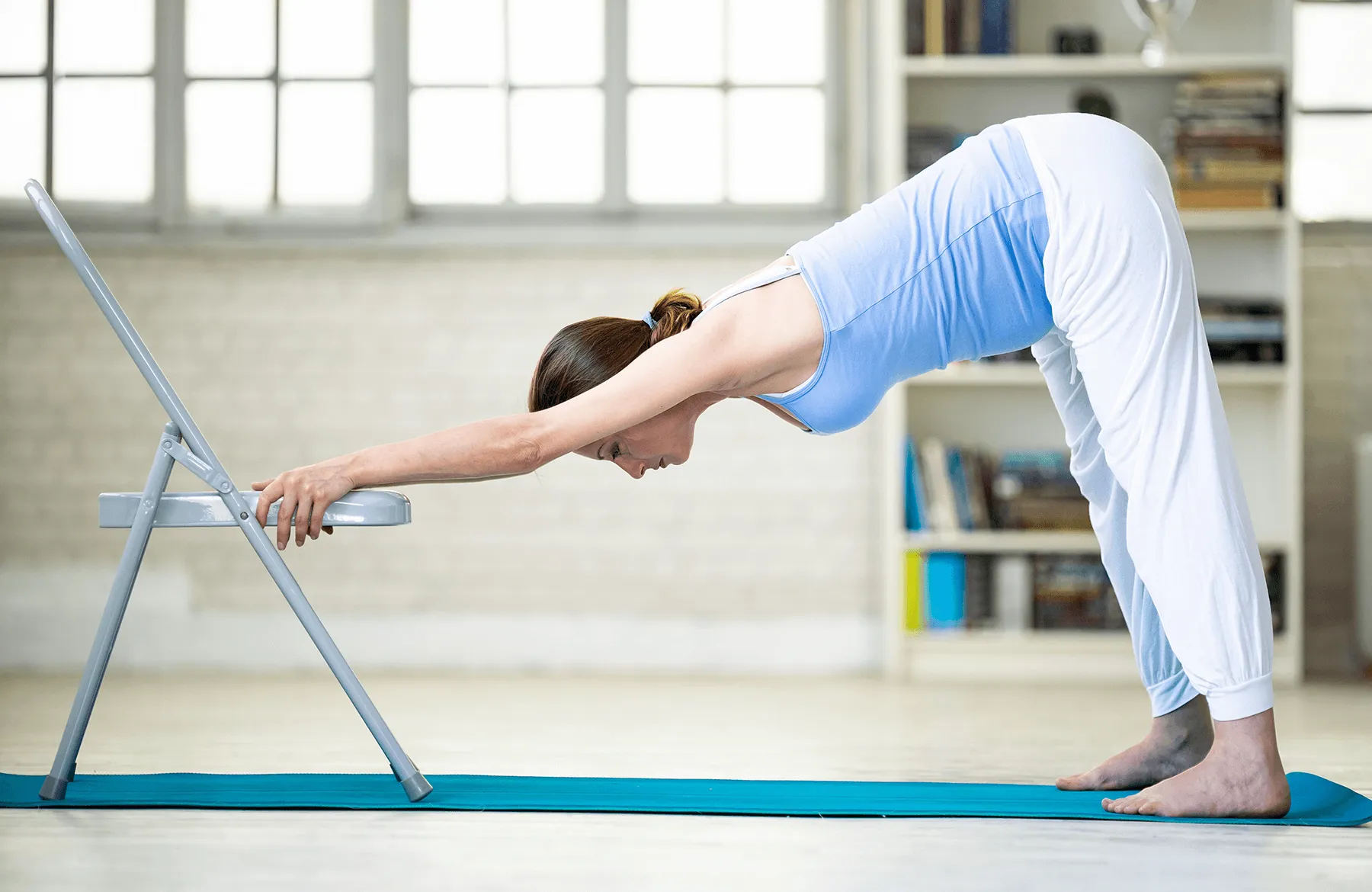
Wellness in Singapore has always reflected the nation’s broader relationship with technology: pragmatic, data-driven, and oriented towards measurable outcomes. The city-state that ranks among the top globally for smart city infrastructure and digital health adoption is now applying the same analytical mindset to something as ancient and intuitive as yoga. What emerges at the intersection of wearable technology, artificial intelligence, and seated movement practice is a genuinely interesting picture of how chair yoga is being quantified, personalised, and made more effective for a diverse population of practitioners.
The Problem With Traditional Yoga Progress Tracking
For most of the history of yoga’s Western adoption, progress was subjective. You felt more flexible. You felt calmer. Your back hurt less. These outcomes are real and valuable, but they are difficult to measure, communicate, and use as the basis for programme refinement.
This posed a challenge for practitioners with specific health goals, such as improving autonomic nervous system recovery, reducing blood pressure, or managing the physiological effects of chronic stress. Without objective data, it was hard to know whether a particular practice was actually achieving its intended effect, or to compare the efficacy of different sequences and frequencies.
Wearable technology and data analytics are beginning to change this, and chair yoga, with its lower physical intensity and its emphasis on breath and nervous system regulation, turns out to be a particularly data-rich practice.
Heart Rate Variability: The Key Metric for Chair Yoga
Heart rate variability (HRV) has emerged as one of the most clinically meaningful biomarkers for autonomic nervous system health. Rather than measuring the average number of heartbeats per minute, HRV measures the variation in time between individual heartbeats. Higher HRV indicates a well-regulated autonomic nervous system with strong parasympathetic tone. Lower HRV is associated with chronic stress, poor recovery, cardiovascular risk, and reduced resilience.
Chair yoga, with its emphasis on slow, conscious breathing and parasympathetic activation, is specifically designed to improve HRV. Wearable devices from brands like Garmin, Apple, Polar, and Fitbit that are widely used in Singapore now measure HRV with increasing accuracy, both during sessions and as a resting baseline metric tracked over time.
Practitioners who track their HRV consistently alongside a regular chair yoga practice can observe in concrete terms how their autonomic recovery improves over weeks and months. A rising resting HRV score is objective evidence that the practice is working at a physiological level, not just a subjective sense of feeling better.
What the data typically shows
Studies examining yoga’s effect on HRV in various populations have found significant improvements in HRV metrics following consistent practice. For practitioners of slower, breath-focused yoga styles, the improvements are particularly pronounced because the breathing regulation component directly drives vagal activation. Sessions that incorporate extended exhalation pranayama techniques consistently show acute HRV increases during practice, and chronic improvements in baseline HRV with regular attendance.
AI-Driven Class Recommendation and Adaptive Programming
Singapore’s yoga studios are increasingly adopting studio management platforms that use machine learning to personalise the class experience. For a modality like chair yoga, which serves a wide range of practitioners with different ages, physical conditions, and goals, intelligent personalisation offers genuine advantages.
Booking behaviour analysis and attendance optimisation
AI-powered scheduling platforms can analyse an individual’s booking history, class attendance patterns, and stated goals to recommend optimal class types, times, and frequencies. For an older adult managing knee osteoarthritis who attends two chair yoga sessions per week, the system might identify that their attendance consistency is highest on Tuesday mornings and Saturday afternoons, and prioritise notifications and scheduling around those time slots to support habit formation.
Progress-informed sequence adjustment
Some platforms are beginning to integrate practitioner feedback, physical assessment data, and wearable-derived metrics to adjust recommended sequences for individual practitioners over time. A participant whose shoulder mobility assessments show significant improvement after three months of chair yoga might be recommended a progression that introduces more overhead reaching components, whilst a participant whose lower back tension remains high might receive more targeted spinal decompression sequencing.
Instructor support tools
AI tools are also being developed to assist instructors in designing chair yoga sequences that are optimally varied across a series of sessions. These tools can track which poses have been included in recent sessions, identify gaps in the body’s range of motion being addressed, and suggest sequences that systematically progress practitioners through different movement planes and intensity levels.
Wearable-Informed Class Design
The relationship between wearable data and class design is becoming more sophisticated. Some studio operators are beginning to collect aggregate, anonymised wearable data from participants who consent to share it, and using this data to understand how different types of chair yoga sessions affect the physiological responses of different participant cohorts.
For example, aggregate HRV data collected during and after different styles of chair yoga, ranging from more vigorous chair-based movement sequences to slow, restorative pranayama-focused sessions, can reveal which formats produce the most significant autonomic nervous system recovery in participants who present with high baseline stress markers. This kind of evidence-based programme design represents a meaningful step forward from the traditional approach of designing classes based on instructor experience alone.
Continuous glucose monitoring and chair yoga
A smaller but growing group of health-conscious Singaporeans are using continuous glucose monitoring (CGM) devices, originally developed for diabetic management, as general metabolic health tools. CGM data shows blood glucose response in real time, and there is emerging interest in understanding how gentle movement practices including chair yoga affect post-meal glucose excursions and overall glycaemic variability. Early observational data suggests that gentle movement performed in the thirty to sixty minutes following a meal can meaningfully blunt post-meal glucose spikes, which has significant implications for practitioners managing pre-diabetes or metabolic syndrome.
The Singapore Digital Health Landscape
Singapore’s Health Hub platform, the national patient health record and wellness ecosystem, represents an infrastructure within which yoga studios and wellness providers could eventually integrate. The integration of wearable-derived wellness data with primary healthcare records would allow general practitioners to see objective evidence of a patient’s yoga practice and its physiological effects, creating a more complete picture of lifestyle-based health management.
The Singapore Health Promotion Board’s Healthy365 application, which tracks physical activity and lifestyle behaviours, already integrates with wearable devices and has a framework for recognising a range of physical activity types. As evidence for yoga’s physiological benefits continues to grow, its inclusion in such frameworks as a recognised, trackable health behaviour becomes increasingly plausible.
Telehealth and Virtual Chair Yoga: Expanding Reach Through Technology
The COVID-19 pandemic accelerated the adoption of virtual yoga instruction in Singapore, and many studios found that chair yoga translated particularly well to online formats. For older adults with mobility limitations or those living in areas with less convenient access to studios, virtual chair yoga delivered through video platforms provides a meaningful option.
The integration of real-time HRV feedback during virtual sessions is an area of active development. Systems that display live HRV metrics during a session, with gentle audio or visual cues to guide breathing toward optimal autonomic response, represent a genuinely novel application of wearable technology to yoga instruction. The instructor can see aggregate class HRV data in real time and adjust the pacing of breath guidance accordingly.
Privacy, Data Ethics, and Informed Consent
Any discussion of health technology must acknowledge the privacy considerations involved. Singapore’s Personal Data Protection Act provides a framework within which studios collecting physiological data must operate, including clear consent processes, data minimisation principles, and secure storage requirements.
Responsible studios will be transparent about what data is collected, how it is used, and how it is stored. Practitioners should feel empowered to ask these questions directly before consenting to wearable data integration. The value of data-informed practice optimisation is real, but it must be built on a foundation of genuine informed consent and robust data governance.
As chair yoga continues to evolve from a gentle wellness option into a measurably effective therapeutic modality, the role of technology in documenting and amplifying its benefits will only grow. Studios like Yoga Edition are at the forefront of integrating thoughtful, evidence-informed approaches into their class offerings, combining traditional movement wisdom with the kind of practical, outcome-focused mindset that resonates deeply with Singapore’s health-conscious population.
Frequently Asked Questions
Q: Do I need a wearable device to benefit from chair yoga?
A: Absolutely not. Chair yoga delivers genuine physical and mental benefits without any technology involvement whatsoever. Wearable devices simply allow those who are interested in objective data to track and quantify the physiological changes that the practice produces. For most practitioners, the subjective experience of feeling better, moving more freely, and managing stress more effectively is more than sufficient evidence that the practice is working.
Q: Which wearable devices are best for tracking HRV during yoga sessions?
A: Chest strap monitors such as the Polar H10 are currently considered the gold standard for HRV accuracy during movement. Wrist-based devices including the Apple Watch Series 8 and 9, Garmin Forerunner and Fenix series, and the Polar Vantage series offer reasonable HRV tracking with the convenience of continuous wear. For chair yoga in particular, wrist-based devices are sufficiently accurate because the lower movement intensity reduces the motion artefact that can affect readings during more dynamic exercise.
Q: Can AI tools replace the role of a human yoga instructor for chair yoga?
A: Not meaningfully, at least not yet. AI tools are excellent at data analysis, scheduling optimisation, and pattern recognition, but they cannot replicate the perceptive, responsive, and relational qualities of a skilled human instructor. A good chair yoga instructor reads the room in real time, notices when a participant is struggling or compensating, offers hands-on adjustments, and builds the kind of trusting relationship that supports long-term practice commitment. Technology is best understood as a complement to skilled human instruction, not a substitute for it.
Q: Is the data from my wearable device during yoga sessions actually medically meaningful?
A: Consumer wearables produce data that is indicative and directional rather than clinically diagnostic. The trends you observe over time, such as a rising resting HRV or a consistent acute HRV increase during your yoga sessions, are meaningful signals about your autonomic nervous system health. However, they should not be used to make clinical decisions or replace medical assessment. If you are using wearable data to monitor a specific health condition, discuss the data and its interpretation with your doctor.
Q: How far away is AI-personalised yoga sequencing as a mainstream studio offering in Singapore?
A: Foundational elements are already present in some of the more technologically advanced studio management platforms. Full AI-driven real-time sequence personalisation based on wearable data is likely still several years away from being a mainstream, reliable offering. However, the trajectory is clear. The convergence of improving wearable accuracy, better machine learning models for movement and physiological data, and increasing consumer comfort with health data sharing suggests that meaningfully personalised yoga programming will be a mainstream offering within this decade.
